
What to Do When Your House’s Sewer Line Breaks
Written by SayBuild Administration // June 5, 2020 // Plumbing // Comments Off on What to Do When Your House’s Sewer Line Breaks

If you start to have backup problems in your sewer line, you may have a clog. Slow drains can also be an indicator that something is wrong with your sewer line. However, if you have someone out to snake the line repeatedly and the problem doesn’t get better, you may have bigger problems than just a clog.
Clogged or Broken?
The best way to test if a line is clogged or broken is to get down there with a camera. Most professionals who can snake a line have access to a camera they can use to check the status or condition of the line.
Broken sewer lines commonly occur in corroded pipes or due to ground shifting. If the break is near your home, it was probably caused by a corroded line that runs from under the toilet to the clay pipe sewer line under the house. This will need to be replaced by gaining access around the outside of the foundation or in the crawl space. If the line break was caused by ground shifting, the problem is probably caused by clay pipe degradation.
A line break near the house can mean that sewer water is backing up into your basement. In this case, cleanup is key. Bag up and toss dirty clothes, stuffed animals, and cardboard boxes that may have gotten fouled. Use a shop vac to mop up liquids, dumping it into a toilet or directly into a sewer drain. Do not dump this waste in a storm drain. Mix 1 cup water to 1 gallon bleach and scrub floors and walls affected. Rinse walls and floors with a hose. Use fans to move air and open windows and doors if possible.
Broken or Collapsed?
Your sewer repair professional can help you determine if the line is broken or collapsed. Clay pipe, over time, can be damaged by tree roots, moisture and pressure. If the break in the line is actually a collapse, your lines will need to be dug up and replaced with plastic.
Sewer line repairs aren’t cheap or easy. Depending on the location of your home and the age of the pipe, you may need to get heavy equipment in your backyard to trench down to the line. For homes that back up to an alley, this heavy equipment access can be quite simple. However, if additions were made on your property such as a garage or storage shed, you may struggle to find access to the sewer line. You may need to take down fences or ask your neighbors for a route to your back yard.
Go Trenchless Where Possible
If your sewer line is deep, consider a trenchless repair. Yes, you may have to dig down to replace the actual break. However, a trenchless line repair can save you a great deal of destruction to your lawn, patio, and outbuildings. Additionally, older homes in older neighborhoods with very deep sewer lines have other digging challenges. Water, phone and gas lines may be between the sod and your sewer line. Trenching via heavy equipment may not be possible.
If your sewer line breaks, you must get it repaired. Even if you don’t have sewage backing up under your home or in your basement, your sewer line could be leaking raw sewage into the local water supply or into your own well water. Get the problem diagnosed by a professional. Do your best to be present when they put the camera down the drain line so you can be aware of exactly what the problem is. If you choose to do any of your own digging, make sure you call the local authorities and get other lines marked so you know where other lines, such as phone and gas lines, are currently running on the property.
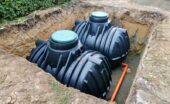
image credit: sewer line breaks by twenty20.com







 If you want to contribute tutorials, news or other money-related stuff:
  Share our home building library with your facebook friends:
  Do you have any ideas or suggestions you would like to make?
  If you like what we do, please subscribe to our
  All content Copyright © 2012 SayBuild. Part of nBuy Home Management Network.