
Plumbing Tips When Building a New Home
Written by SayBuild Administration // May 22, 2015 // Plumbing // Comments Off on Plumbing Tips When Building a New Home
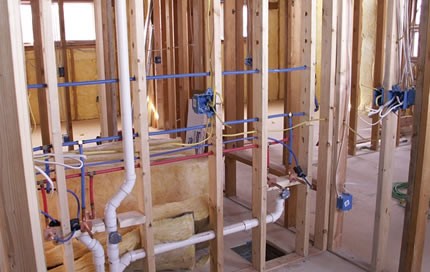
There is no place like home, right? It’s definitely comforting to have your own personal living space, but if you’re in the process of building one from scratch, it can be rewarding, but also quite a handful. There are so many technical details you need to pay attention to, which means that you practically need a professional team of builders to cover every aspect of it – from below the ground to the roof and in between the walls.
Now, this can be a costly feat, but, on the other hand, you can also take some matters into your own hands, roll up your sleeves and study the craft yourself. In this article we will be discussing plumbing, so just focus your attention on a few little tips I’m about to give you and you should be on your way to understanding the basics, after which you can consult your licensed plumber to help you with installing the system.
Proper Planning
First off, when the whole project is at the very beginning, it is crucial that you plan plumbing long before the concrete foundation is laid. Make sure everything is set according to the building code of your country (for instance, this is how it looks in Australia). Building codes are a set of rules that specify the minimum standards for constructed objects, protecting public health and ensuring general welfare. This is an obligation for the licensed plumber, he/she has to know the requirements of your neighbourhood, but you should also be informed how the whole building control system functions.
Minding the Regulations
It is paramount to deal with the law and regulations first, since they are the starting point of any legal improvement of property, claims a reputed Sydney-based plumber. Once all authorizations have been made, the next thing you should know is that there are two main systems that need planning. One is the water distribution/supply system that regulates the flow of water in your home, meant particularly for kitchens, laundry rooms, bathrooms, etc. The other is the drain/waste system which flushes out waste from your home to the sewerage. This encompasses components such as receiving drains, manholes, pumping stations, storm overflows, and screening chambers of the combined sewer or sanitary systems.
Placing Devices Properly
Next up, here is some advice where you should place some water supplying elements. The water heater and furnace should go in the basement, but if you do not have one, than the following option should be on the main floor of the house. Also, if there is a basement, it is recommended that you place the main shut-off valve for every plumbing component and sewer connection in the same corner. Oh, and remember to plumb the house for a water softener and have a sump pump discharge line connected to the storm sewer, or any area that’s not very close to your house.
Pipe Selection
Distribution systems tend to be made from expensive copper pipes, but you can decide to buy, or replace them with an alternative known as CPVC (chlorinated polyvinyl chloride). These pipes have natural insulating properties, maintaining the quality of water and are anti-corrosive. Besides CPVC, there are also more rigid PVC (polyvinyl chloride) and ABS (acrylonitrile butadiene styrene) pipes you can choose.
Thinking Ahead
Eventually, keep the future in mind, maybe you’ll be making additional modifications someday. For instance, if you have the means and the desire to build an extra bathroom, routing pipes should be able to access your existing pipes with ease, in order to avoid unnecessary replacements. Also, make sure you have shut-off valves for various points of the house, that way you won’t have to dry the whole place up.








 If you want to contribute tutorials, news or other money-related stuff:
  Share our home building library with your facebook friends:
  Do you have any ideas or suggestions you would like to make?
  If you like what we do, please subscribe to our
  All content Copyright © 2012 SayBuild. Part of nBuy Home Management Network.