
Common Deck Installation Mistakes That Compromise Safety
Written by publishingreporting@logicalposition.com // November 20, 2026 // Decks // No comments
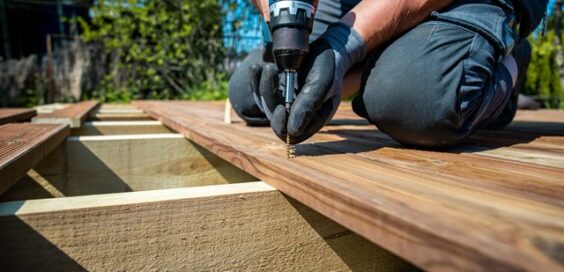
A deck’s safety depends heavily on what happens during construction. Even when builders use quality materials, poor installation can weaken the structure and create problems that aren’t obvious when you first start using the space.
Many common deck installation mistakes involve structural details that become difficult to inspect once the project is finished. Knowing where these mistakes occur and how they affect the deck gives you a better understanding of what proper construction involves.
Installing Footings Too Shallow
Deck footings support the weight of the structure, but they need to reach the proper depth to do their job. In colder climates, the ground freezes and expands during winter, pushing against anything buried too close to the surface.
Shallow footings can move upward as the soil freezes and settle unevenly when it thaws. Over time, this movement can leave the deck uneven and put extra stress on the framing above.
Local building codes establish minimum footing depths based on regional frost conditions. Installing footings at the required depth keeps seasonal ground movement from affecting the deck’s foundation.
Attaching the Ledger Board to Siding
For decks attached to a house, the ledger board carries part of the structure’s weight through its connection to the building. It needs a strong attachment to the home’s structural framing, which is where improper installation creates trouble.
Siding isn’t designed to support a deck, so fastening the ledger directly to it leaves the connection without adequate structural support. Builders need to use approved fasteners that reach the proper framing members behind the exterior wall.
Flashing above the ledger is important, too. It directs rainwater away from the attachment, protecting the surrounding wood from moisture damage that could weaken the connection.
Spacing Floor Joists Too Far Apart
Joists support the decking beneath your feet, and the distance between them affects how much the boards bend when someone walks across the surface. Too much space leaves the decking without adequate support.
Over time, excessive movement can damage deck boards and loosen their attachments. You may even notice the surface flexing underfoot long before any visible damage develops.
The right joist spacing depends on the decking material and the framing design. Decking manufacturers specify how far apart the joists should sit, while building codes establish allowable joist spans. Following these requirements keeps the surface properly supported.
Using Incorrect Structural Fasteners
Not every screw belongs in a structural deck connection. Some fasteners work perfectly well for securing deck boards but lack the strength needed to connect the framing underneath.
Joist hangers are one area where this mistake shows up. Manufacturers specify which nails or approved structural screws to use because the connection needs to withstand loads in particular directions. Substituting ordinary deck screws can weaken the attachment.
Outdoor exposure is another reason to choose hardware carefully. Fasteners need corrosion protection compatible with treated lumber, since certain metal coatings deteriorate when they contact the chemicals in the wood.
Connecting Beams to Posts Improperly
Deck beams rest on support posts that carry the weight of the framing above them. If builders attach these beams incorrectly, the connection can weaken under the weight of the deck and everyone using it.
One mistake is fastening a beam to the side of a post without providing proper support underneath. In this arrangement, the bolts or screws may have to carry the beam’s weight on their own, putting more stress on the connection.
A properly installed beam rests directly on top of the post or in an approved notch that supports it from below. Structural connectors then secure the beam in position, keeping the connection strong without relying on fasteners alone to carry the weight.
Failing to Reinforce Railing Posts
People lean against deck railings without giving it much thought, which is exactly why the posts need strong connections. A railing should withstand that pressure without shifting or pulling away from the deck.
Attaching posts only to the deck boards leaves them without adequate structural support. Even connections to the rim joist need proper reinforcement to handle the outward pressure people place on the railing.
Blocking and approved structural connectors anchor the posts to the deck framing. With the right reinforcement, the railing can handle everyday use without excessive movement at its attachment points.
Leaving Excessive Gaps Between Balusters
Balusters keep people from passing through the openings along a deck railing. When builders leave too much space between them, those openings become a safety concern for young children.
Many residential building codes use a four-inch sphere test for deck guard openings. If a sphere of that size passes through, the spacing generally exceeds the permitted limit. Certain stair railing openings follow different requirements.
Proper spacing is an important detail when designing a child-friendly deck. Measuring the railing sections before installation keeps the balusters evenly positioned while meeting the applicable safety requirements.
Building Stairs With Uneven Riser Heights
When you walk up or down stairs, you expect each step to have roughly the same height. Even small differences can throw off your footing because your body anticipates the next step based on the previous one.
Uneven risers sometimes result from builders overlooking the thickness of the finished decking during their measurements. The top or bottom step ends up taller or shorter than the others.
Calculating the total rise before cutting stair stringers prevents this problem. Building codes limit how much riser heights can vary within a staircase, so accurate measurements are important from the first step to the last.
Installing Stair Handrails at the Wrong Height
A stair handrail needs to sit at a height where someone can comfortably grip it while moving between the deck and the ground. Installing it too high or too low makes that harder than it should be.
One common mistake involves measuring from the stair stringer rather than the tread nosings. Residential building codes commonly require handrails to sit between 34 and 38 inches above the nosings.
Builders need to maintain the required height throughout the staircase. Measuring at multiple points along the slope keeps the handrail positioned correctly from top to bottom.
Choosing Inadequate Gate Hardware
Deck gates need hinges that can support their weight through repeated opening and closing. When the hinges are too small or weak, the gate can gradually sag and pull out of alignment.
As the gate shifts downward, the latch may no longer line up with its receiving hardware. A gate that doesn’t latch securely can swing open unexpectedly, creating a safety concern on elevated decks.
Proper hardware selection accounts for how frequently people use the gate. For high-traffic decks, choosing the right gate hardware is important because repeated movement puts additional strain on the hinges. Heavy-duty hinges rated for the gate’s weight keep it properly aligned through regular use.
Enjoy Your Deck Without Second-Guessing the Construction
Avoiding common deck installation mistakes starts with taking the work seriously from the beginning. When every connection is installed correctly and the finished structure meets local building requirements, you can spend less time worrying about the deck and more time enjoying it.
Image Credentials: By True Pixel Art, 635792433


 If you want to contribute tutorials, news or other money-related stuff:
 Share our home building library with your facebook friends:
 Do you have any ideas or suggestions you would like to make?
 If you like what we do, please subscribe to our
 All content Copyright © 2012 SayBuild. Part of nBuy Home Management Network.